Rethinking your horses living environment in a few easy steps
When we talk about improving our horses’ welfare, many people immediately think of the big things. New facilities. Expensive equipment. But in our experience, it’s often the small, well-considered environmental changes that make the biggest difference not just to welfare, but to efficiency, staff workload and long-term sustainability.
Horses are environmental creatures. Their nervous systems, respiratory health, hydration, movement patterns and social behaviours are all shaped by the spaces we ask them to live in. Subtle improvements to airflow, footing, water access and social contact can profoundly influence both physical health and mental wellbeing. If we want horses who are healthier, calmer and more resilient, and yards that run more smoothly, we need to look carefully at the details.
Airflow, Space and Social Contact
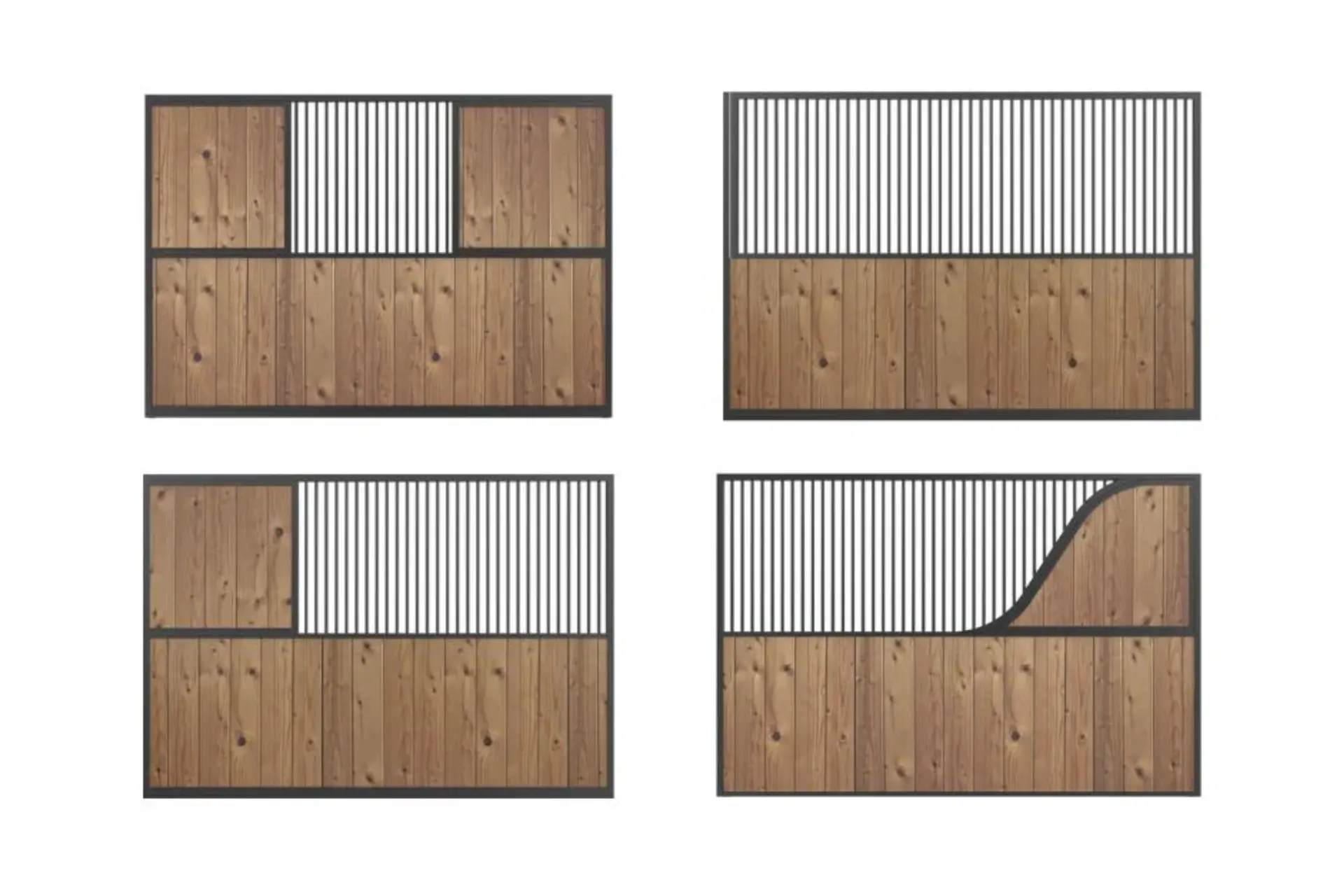
Ventilation is one of the most underestimated aspects of stable design. Yet respiratory health underpins everything from performance capacity to immune resilience. A well-ventilated stable does not need to mean a cold or draughty one. It means consistent airflow, reduced ammonia build-up and better oxygen exchange. Adding simple features such as additional windows, lower grills in stable doors, or open partitions between neighbouring stables can significantly improve air quality and light exposure.
Light matters more than many people realise. Horses are highly sensitive to natural light cycles, and improved exposure supports circadian rhythm regulation, hormone balance and behavioural stability. A dark, enclosed stable restricts movement and stimulation. Introducing more openness immediately changes how a space feels, for both horse and human.
Lower grills or stable door adjustments that allow horses to see and interact with one another also address the core behavioural need of social contact. Horses are herd animals. Even small opportunities for mutual grooming, visual contact and shared space can reduce stress and stereotypical behaviours. Increasing perceived space within a stable, even by encouraging interaction through partitions, can reduce feelings of confinement.
These are not dramatic structural renovations. They are thoughtful adjustments that acknowledge how a horse experiences its environment.
Examples of stable divider styles
At Jelka we offer bespoke horse housing systems designed and built by ourselves.
Water Access and Efficiency
Hydration is fundamental to equine health. It influences digestion, temperature regulation, muscle function and recovery. Yet access to fresh water can still be inconsistent in traditional management systems.
Automated water drinkers can be controversial. One of the common concerns is the perceived loss of monitoring, and the worry that we cannot easily track exactly how much a horse is drinking. That concern is valid. However, we must weigh it against the significant advantages.
Automatic drinkers ensure constant access to fresh, clean water throughout the day and night. They remove the risk of buckets being emptied, tipped over or contaminated. They reduce manual labour and time pressure on staff, particularly on larger yards where refilling twice daily across dozens of stables is not insignificant. In colder months, they can reduce freezing issues compared to standard buckets. In warmer weather, they minimise stagnation. From an efficiency perspective, they free up time for higher-value care tasks. From a welfare perspective, they provide reliable hydration on demand.
Where monitoring intake is critical, there are practical solutions like flow meters, routine checks, or periodic bucket monitoring for specific horses. The key is not rejecting progress because it is different, but implementing it intelligently.
Turnout, Mud and the Winter Compromise
If you manage horses in the UK, you understand the winter mud dilemma. Mud is one of the primary reasons turnout becomes restricted. Gateways churn into deep, unstable ground. Walkways become slippery. Horses stand in wet conditions for prolonged periods, increasing the risk of mud fever, thrush and abscesses. Eventually, turnout time is shortened, not because we want to, but because conditions feel unmanageable. This is where targeted interventions such as mud mats can be transformative.
Installing mud control systems, such as HIT Top Clean mats, in high-traffic areas like gateways, around hay stations or along main walkways can dramatically reduce ground degradation. By stabilising these pressure points, we maintain safer footing, protect hoof health and significantly extend usable turnout time. Longer turnout is not a luxury. It supports joint mobility, digestive health, social interaction and mental stability. It reduces stress behaviours and improves overall welfare.
Importantly, mud mats benefit humans too. Safer, drier access reduces slips, improves daily efficiency and decreases the physical strain on staff. Welfare and practicality can, and should, align.
Indoor Flooring
We often underestimate how much flooring influences a horse’s daily experience. Traditional concrete floors amplify noise and increase concussion. They create slipping hazards when wet and can make stable environments feel harsher than we intend.
Modern stable flooring options can dramatically improve comfort and safety. Rubberised or shock-absorbing surfaces, such as the Belmondo range, reduce impact on joints and minimise slipping. They dampen sound, creating a calmer environment. Reduced noise may seem minor, but horses are highly attuned to sudden or sharp sounds. A quieter stable can mean a more relaxed horse.
Improved flooring can also enhance hygiene. Non-porous, well-draining surfaces are easier to clean and maintain, reducing bacterial load and ammonia build-up. Over time, this contributes to respiratory and hoof health.
Welfare and Efficiency Are Not Opposites
There is sometimes an assumption that welfare improvements are costly or complicated. In reality, thoughtful environmental design often improves efficiency at the same time.
Better airflow supports respiratory health and reduces veterinary costs. Automated drinkers save staff time. Mud management increases turnout availability. Improved flooring reduces injury and stress. When we shift our perspective from “minimum adequate” to “optimised environment,” we begin to see how interconnected everything is.
Horses do not separate their world into categories of ventilation, hydration, social contact and footing. They experience it as one continuous environment. Our job is to refine that environment so that it supports their physiology and behaviour rather than challenging it.
You do not need to rebuild your yard to improve welfare. You need to look closely at how your horse lives each day. Small changes, implemented intentionally, compound over time.
Let's talk about your stable