
Which plants are most dangerous to horses in the UK?
The most dangerous plants commonly found in UK paddocks and hedgerows are ragwort, yew, foxglove, oak, privet, deadly nightshade, hemlock, bracken fern, buttercup, horsetail, charlock, monkshood and sycamore. Of these, yew and ragwort are the most frequently responsible for horse deaths - yew because even a small dose is rapidly fatal, ragwort because its toxicity builds up silently in the liver over time before symptoms appear. Any of the 13 plants listed in this guide should be removed from grazing land immediately on discovery.
Introduction:
Most horse owners know the basics - ragwort in the field, yew trees near the fence line. But plant toxicity is responsible for a significant number of equine deaths in the UK every year, and many cases involve plants that owners either did not recognise or did not realise were dangerous in dried or wilted form.
This guide covers 13 plants commonly found in UK paddocks, hedgerows, gardens and hay fields that pose a serious risk to horses. For each one we cover what it looks like, what it does, and how to remove it. Some work quickly, some accumulate over months - both are worth knowing.
A few things to bear in mind before you read on. Many of these plants are more dangerous in dried or wilted form than when fresh - ragwort, hemlock and horsetail in particular remain toxic after cutting and can end up in hay inadvertently. Horses will often avoid toxic plants when there is adequate grazing available, which is why poor pasture management and overgrazing increase risk significantly. And some plants - yew especially - are lethal in quantities too small to notice until it is too late.
A note on plant identification
The images in this guide show each plant at its most recognisable stage - typically when in flower, berry or seed, as these are the features most easily spotted by horse owners during routine paddock checks. Plants look different at other stages of growth and in different seasons, and some species can be confused with harmless lookalikes. If you are uncertain about a plant on your land, consult a qualified botanist, your local agricultural college, or contact the British Horse Society for guidance before attempting removal. When in doubt, remove your horse from the area and seek advice.
RAGWORT (Senecio jacobaea)
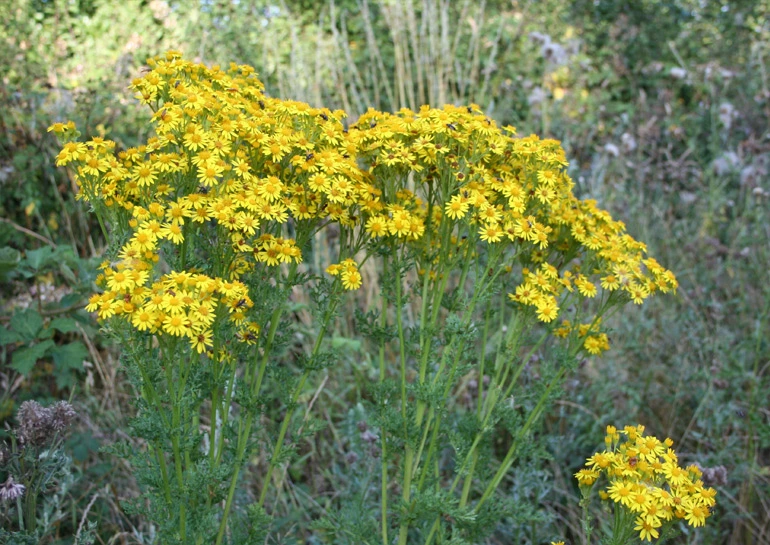
Ragwort is one of the most common and most dangerous plants in UK paddocks. It flowers from July to October, growing up to 90cm tall with clusters of bright yellow daisy-like flowers on branching stems. The leaves are deeply lobed and jagged-edged - distinctive enough to recognise even before the plant flowers. In its first year it grows as a low flat rosette at ground level, which is the stage most commonly missed and the stage at which it is most palatable to horses.
What it does
Ragwort is a slow, silent killer. The toxins - pyrrolizidine alkaloids - accumulate in the liver with every mouthful, causing irreversible damage that builds over weeks, months or years before symptoms appear. By the time a horse shows signs of poisoning the liver damage is usually already catastrophic. A horse can become just as ill from small amounts eaten regularly over a long period as from a single large dose.
Symptoms of ragwort poisoning include unexplained weight loss despite normal appetite, photosensitisation where areas of unpigmented skin become severely inflamed and painful in sunlight, jaundice, neurological signs including apparent blindness, staggering and collapse. Death can follow quickly once symptoms appear and some owners find their horse dead without any prior warning.
Danger when cut or wilted
Horses will often avoid ragwort when it is growing because it tastes bitter. They are far more likely to eat it when it has been cut and wilted, or when it has been accidentally baled into hay - at which point the bitterness is reduced but the toxins remain fully active. Never cut ragwort and leave it lying in a field.
What to do
Dig it out by the roots - pulling without removing the root will simply cause it to regrow. Wear gloves as the plant is mildly toxic to humans through skin contact. Burn all removed plants rather than composting them. Do not leave cut plants in the field even temporarily.
Ragwort is covered by the Weeds Act 1959 and the Ragwort Control Act 2003 - landowners have a legal duty to prevent its spread to neighbouring land. DEFRA publish a code of practice on ragwort control which is worth reading if you have significant infestations.
Check paddocks regularly from early spring when rosettes emerge. Early removal before flowering prevents seed spread - a single plant can produce up to 150,000 seeds which remain viable in soil for up to 20 years.
FOXGLOVE (Digitalis)
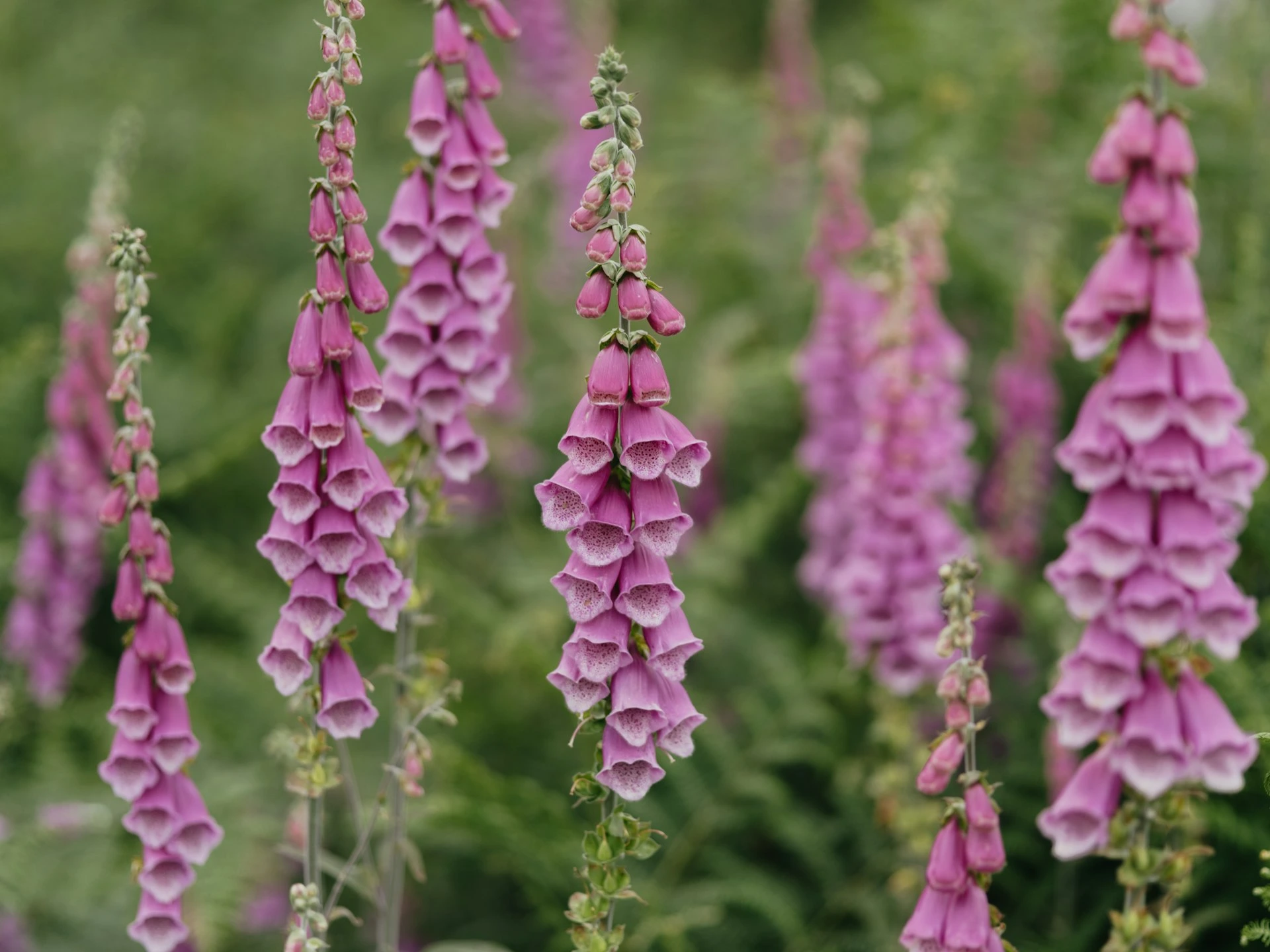
Foxglove is one of the most striking wildflowers in the UK - tall spikes of tubular bell-shaped flowers in pink, purple or occasionally white, growing up to 1.5 metres tall and commonly found in woodland edges, hedgerows, disturbed ground and sometimes garden borders that back onto paddocks. It flowers from June to September. In its first year it grows as a rosette of large, soft, oval leaves with a distinctive woolly texture on the underside - easy to overlook until the flower spike emerges in year two.
The most important identification detail at any stage is the leaf - large, heavily veined, softly hairy, with a slightly wrinkled surface. If you find large soft hairy leaves in or near your paddock and are not sure what they belong to, treat them as suspicious until confirmed otherwise.
What it does
Every part of the foxglove plant is toxic, including the roots, leaves, flowers and seeds. The toxin is digitoxin, a cardiac glycoside that interferes with the electrical signals controlling the heart. In controlled medical doses it is used as a heart medication - in an uncontrolled dose from ingested plant material it causes the heart to beat erratically and eventually stop.
As little as 100g of fresh plant material can be fatal to a horse. Symptoms come on relatively quickly compared to ragwort and include drooling, abdominal pain, diarrhoea, depression, staggering, muscle tremors, an irregular or racing heartbeat and convulsions. Heart failure can follow rapidly. If you suspect ingestion call your vet immediately - early intervention can make a difference.
Danger in hay
Foxglove retains its toxicity when dried and has been known to be accidentally harvested with hay, particularly from hay fields adjoining woodland edges or gardens where foxglove is established. Check your hay source and make sure your supplier actively manages their fields for toxic plants. If you find foxglove in a hay bale discard the entire bale.
What to do
Remove any foxglove found in or near paddocks immediately. Wear gloves - the plant is toxic to humans through skin contact and especially dangerous if touched and then hands are put near the mouth or eyes. Dispose of removed plants safely rather than leaving them to wilt in the field. Foxglove does not spread as aggressively as ragwort but will self-seed if allowed to flower, so remove before flowering where possible.
YEW (Taxus Baccata)
Yew is the most immediately lethal plant on this list. There is no margin for error and no time to wait and see - if you have yew accessible to your horses, remove access today.
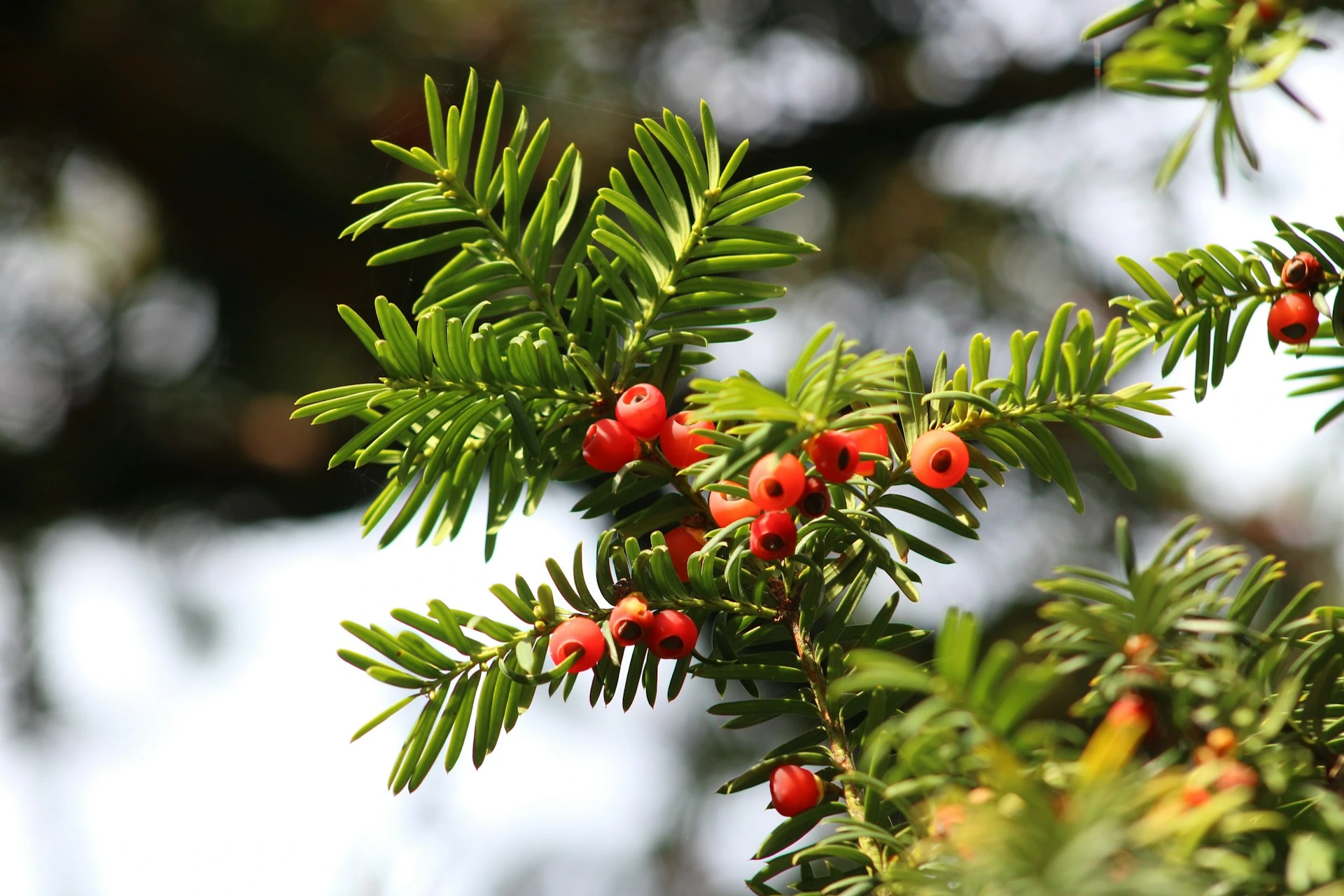
It is a common evergreen tree or large shrub found throughout the UK in churchyards, gardens, estate boundaries and mature hedgerows. The leaves are flat, dark green needles arranged in two rows along the stem, paler underneath. The distinctive red berries - technically arils rather than true berries - appear in autumn and have an open cup at the tip revealing a single dark seed. The red fleshy part of the aril is the only part of the plant that is not toxic, but the seed inside it is. Every other part of the plant - leaves, bark, seeds - is lethal, and remains so when dead and dried.
What it does
Yew contains taxine alkaloids which act directly on the heart muscle, disrupting the electrical system that controls the heartbeat. The effect is rapid and overwhelming. A dose of as little as 200g of fresh yew leaves is enough to kill a horse, and death can occur within minutes to a few hours of ingestion with no warning signs. In many cases the horse is simply found dead. There is no antidote and there is rarely enough time to call a vet.
Symptoms when they do appear include sudden muscle weakness, trembling, difficulty breathing, a slow or irregular heartbeat and collapse. The speed of onset means that by the time symptoms are visible the situation is already critical.
What to do
Do not place horses in any paddock where yew is present or accessible - including yew in neighbouring gardens or churchyards if horses can reach through or over the boundary. Dead yew clippings dumped near a field boundary are equally dangerous and a surprisingly common cause of poisoning - horses will eat wilted yew material that they would ignore when fresh.
If you find yew accessible to your horses remove it or block access immediately. Do not wait. If you suspect a horse has eaten yew call your vet as an emergency without delay - speed of response is the only variable you can control.
Yew clippings should never be left where horses can access them. If you are having garden hedging cut near paddocks confirm with the contractor that no clippings will be left near field boundaries.
Sycamore (Acer Pseudoplatanus)
Sycamore has become one of the most serious equine toxicity concerns in the UK over the last decade, and awareness still lags behind the actual risk. The tree itself is extremely common - found in hedgerows, field boundaries, woodland edges and gardens across the whole country - and its seeds travel significant distances in wind, meaning horses do not need to be near a sycamore tree to be at risk from one.
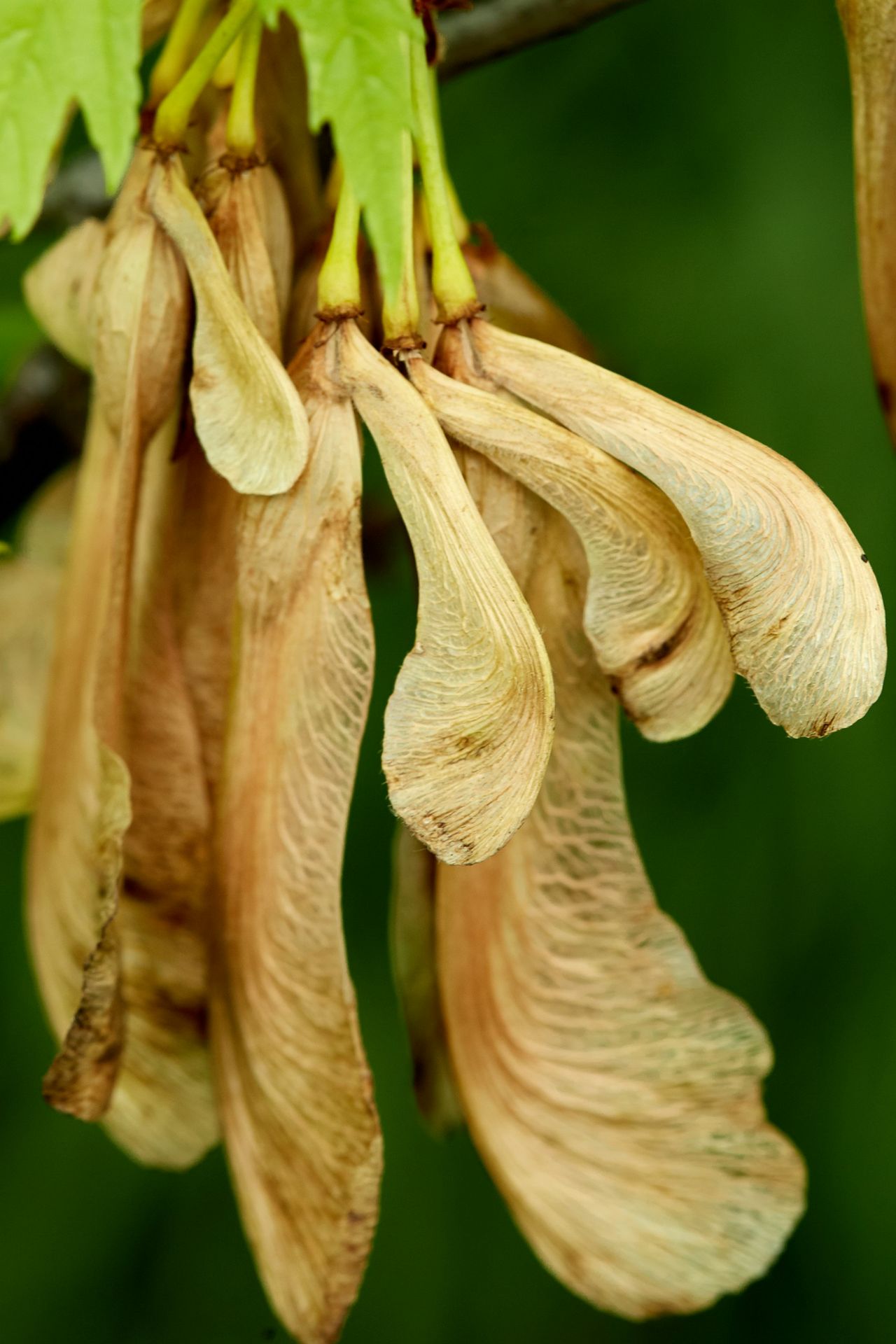
The tree is identified by its large five-lobed leaves similar in shape to a maple leaf, grey-brown furrowed bark, and most distinctively its paired winged seeds - the helicopters or keys that fall in autumn and are immediately recognisable to most people even if they do not know which tree they come from. Seedlings emerge in spring and are small enough to be missed during routine paddock checks.
What it does
The seeds and seedlings contain a toxin called hypoglycin A which causes Atypical Myopathy - a severe and rapidly progressing muscle disease that targets the muscles the horse needs to breathe and stand. It is not a gradual poisoning like ragwort. It can kill within 24 to 72 hours of ingestion and has a mortality rate of around 75% even with prompt veterinary treatment.
The disease tends to occur in two seasonal peaks - autumn when seeds fall and spring when seedlings emerge. Both are periods when grass is sparse and horses are more likely to graze on material they would otherwise avoid. Horses at pasture on poor grazing are significantly more at risk than those on well-managed paddocks with adequate grass cover.
Symptoms appear suddenly and include severe muscle weakness, reluctance or inability to move, sweating, difficulty breathing, an inability to raise the head, and dark or reddish-brown urine caused by myoglobin released from damaged muscle tissue. If you see any of these signs contact your vet immediately - time is the critical variable.
What to do
Check paddocks for fallen seeds and seedlings during October to December and again in March to May. Remove horses from any paddock where sycamore seeds or seedlings are present during these high-risk periods, particularly if grazing is sparse. There is no antidote - prevention and early removal from the source are the only effective strategies.
Any paddock with sycamore trees nearby, including on neighbouring properties, should be considered at risk during seed fall. Seeds are light enough to travel considerable distances from the parent tree so proximity alone is not a reliable guide to whether seeds are present in a paddock.
OAK (Quercus)
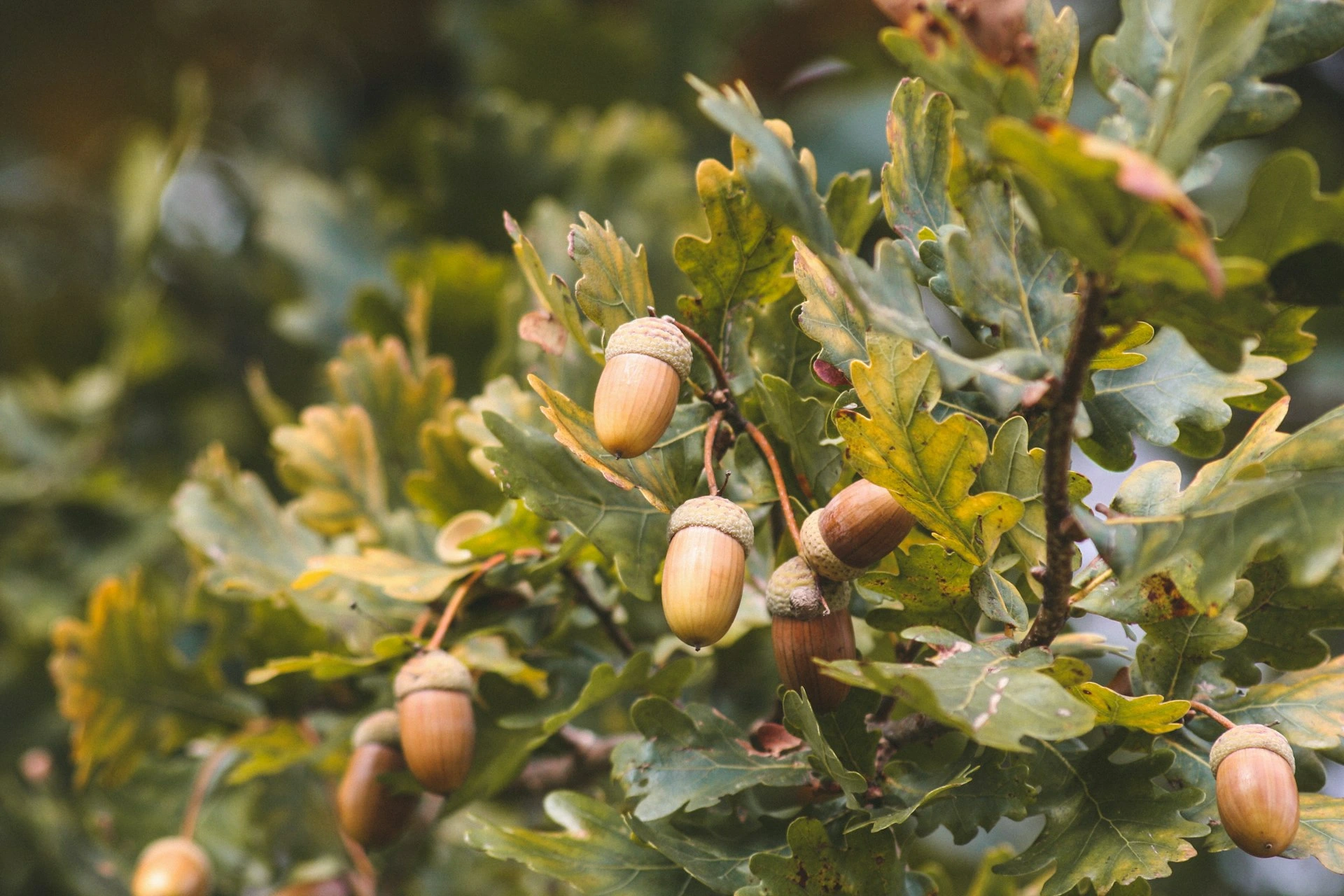
Oak is so familiar a tree that most horse owners do not think of it as a toxicity risk - which is precisely why it causes problems. The risk is not from the tree itself year-round but from acorns and young oak leaves in autumn and spring respectively, both of which contain high concentrations of tannins that cause serious digestive and kidney damage in horses.
The tree needs no description for most people but the key identification points for the risk periods are: the distinctive lobed leaves in spring when young and bright green - these are higher in tannins than mature leaves and more palatable; and the acorns from late summer through autumn, initially green ripening to brown, sitting in their characteristic scaly cups. Horses that have access to oak trees during these periods will often actively seek out and eat acorns, which is what makes oak particularly dangerous - it is not a case of accidental ingestion but deliberate grazing on a toxic food source.
What it does
Tannins in oak leaves and acorns are toxic to horses in quantity, causing damage to the gut lining and kidneys through a process called gallotannin poisoning. Unlike ragwort or yew the damage is dose-dependent and accumulates - an occasional acorn or two is unlikely to cause serious harm but a horse with unrestricted access to fallen acorns over days or weeks can develop severe poisoning.
Symptoms begin with loss of appetite and depression, progressing to colic, constipation followed by foul-smelling diarrhoea, abdominal pain and frequent attempts to urinate as the kidneys come under stress. In severe cases kidney failure follows. Young horses, ponies and horses in poor condition are most vulnerable.
What to do
Fence off oak trees during the acorn season - late August through November depending on your region. Do not allow horses to graze under oak trees during leaf fall or acorn drop. If acorns are falling into a paddock from a neighbouring tree, increase supervision and consider moving horses to an alternative field during peak fall.
If you suspect acorn poisoning contact your vet promptly. Treatment is supportive and more effective when started early before significant kidney damage has occurred. Remove access to the source immediately.
PRIVET (Ligustrum)
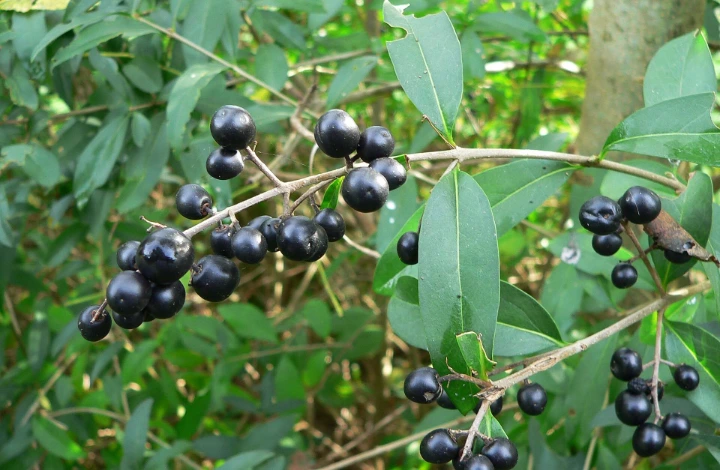
Privet is one of the most widely planted hedging shrubs in the UK, which makes it a common boundary plant around paddocks and gardens adjoining horse grazing. It is reliably evergreen, grows densely, and is frequently used as a low-maintenance alternative to traditional hedgerow species - all of which means horses in paddocks with privet boundaries have regular access to it year-round.
Identify it by the small, oval, glossy leaves arranged in opposite pairs along woody stems. In summer it produces small clusters of white flowers with a distinctive heavy scent. By autumn these develop into tight clusters of small round black berries which persist through winter. The plant is toxic at all stages - leaves, berries and bark - though the berries are the most concentrated source of the toxin syringin.
What it does
Privet causes severe gastrointestinal distress. Horses cannot digest the toxic compounds and the effect on the digestive system is rapid and aggressive. Unlike ragwort which accumulates slowly, privet poisoning can progress to a critical state within hours of ingestion.
Symptoms include profuse salivation, incoordination and staggering, rapid onset diarrhoea, muscle weakness, convulsions and in severe cases paralysis. Without prompt veterinary treatment a horse can die within 4 to 48 hours of ingesting a significant quantity. Call your vet immediately if you suspect privet poisoning - do not wait for symptoms to develop further.
Horses will generally avoid privet when good grazing is available but will investigate and eat boundary hedging when grass is sparse, particularly in winter and during dry summers when paddock grazing is poor.
What to do
Do not use privet as a paddock boundary hedge. If you have existing privet boundaries inspect them regularly for gaps or low sections where horses can reach through to graze. Reinforce any accessible sections with stock fencing set back from the hedge line.
Avoid stopping to graze your horse near privet hedges when out hacking - even a small quantity eaten regularly can cause cumulative problems. If you are having privet hedging cut near paddocks ensure all clippings are removed promptly as wilted privet remains toxic.
DEADLY NIGHTSHADE (Atropa Belladonna)
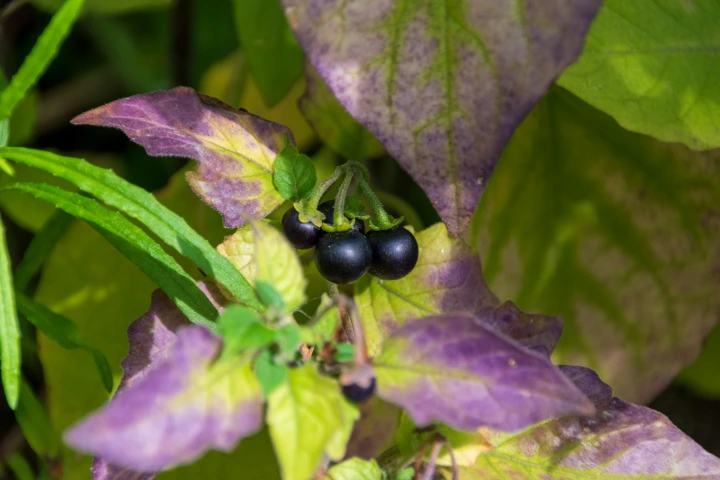
Despite its dramatic name, deadly nightshade is not the most common cause of equine plant poisoning in the UK - it is relatively rare in paddocks and horses generally find it unpalatable. However it is worth knowing because it grows in hedgerows, woodland edges and disturbed ground, and because it is frequently confused with bittersweet or woody nightshade (Solanum dulcamara) which is a different and less toxic plant that is far more commonly encountered.
True deadly nightshade (Atropa belladonna) is a large, bushy plant growing up to 1.5 metres tall with large, soft, dull green oval leaves and a distinctly unpleasant smell. The flowers are drooping, dull purple or greenish-purple bells - not the swept-back purple petals with a yellow cone that characterise bittersweet. The berries are large, round and shiny black with a distinctive star-shaped green calyx at the top, sitting singly or in pairs rather than in clusters. The berries are the most recognisable feature and the most dangerous part of the plant.
Distinguishing it from bittersweet
Bittersweet (Solanum dulcamara) is the plant most people actually encounter and mistake for deadly nightshade. It is a scrambling vine with small purple swept-back petals and a prominent yellow anther cone - like a tiny tomato flower - producing small oval berries that ripen from green to red. It is toxic but significantly less so than true Atropa belladonna. If you see red or orange berries on a climbing vine with small purple flowers, that is bittersweet not deadly nightshade. Both should be removed from paddocks but they are different plants.
What it does
Every part of Atropa belladonna is toxic. The active compounds are atropine and scopolamine which affect the nervous system, causing a rapid onset of symptoms including dilated pupils, dry mouth, rapid heart rate, disorientation, excitement or agitation followed by depression, difficulty swallowing, and in severe cases convulsions and coma. The berries are particularly dangerous because their sweetness makes them more palatable than the rest of the plant.
What to do
Remove any plants identified as deadly nightshade from paddocks and field boundaries immediately. Wear gloves - the toxins are absorbed through skin contact. If you suspect ingestion remove the horse from the pasture immediately and call your vet. Do not wait for symptoms to worsen before seeking advice.
If you are uncertain whether a plant is deadly nightshade or bittersweet, treat it as the more dangerous of the two and remove it anyway. Both are toxic and neither belongs in a horse paddock.
COWBANE/HEMLOCK (Conium Maculatum)
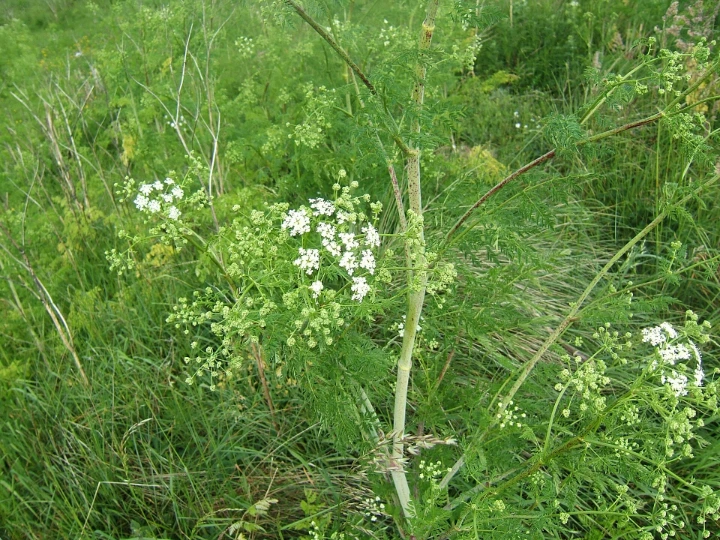
Hemlock is one of the most toxic plants in the UK and one of the most important to be able to identify correctly - not least because it looks almost identical to several completely harmless plants that grow in the same habitats. Cow parsley, ground elder, hogweed and sweet cicely all share hemlock's white umbrella-shaped flower clusters and feathery leaves, and all grow in similar damp, shaded conditions along field edges, ditches and hedgerow bases. Getting the identification wrong in either direction matters.
The single most reliable feature that separates hemlock from its harmless lookalikes is the stem. Hemlock stems are hollow, smooth and hairless, with distinctive irregular purple-red blotching or mottling - the purple patches look almost like bruising or ink splashes on an otherwise green stem. No harmless umbellifer has this feature. If you see white umbrella flowers on a tall plant and the stem has purple markings, that is hemlock. If the stem is plain green and hairy, it is almost certainly cow parsley. Learn this distinction and you will not confuse the two.
Hemlock grows up to 2 metres tall, flowering from June to July. It tends to favour damp ground, ditches, riverbanks and disturbed soil along field margins. It has a distinctly unpleasant musty smell when the leaves or stem are crushed - another useful distinguishing feature in the field.
What it does
All parts of hemlock are toxic, though the roots and seeds are the most concentrated sources of the toxin coniine. Coniine causes progressive neuromuscular paralysis - it blocks the nerve signals that control muscle movement, working upward from the legs toward the respiratory muscles. Death occurs through respiratory failure when the horse can no longer breathe.
Symptoms include nervousness and agitation followed by progressive muscle weakness starting in the hindlimbs, incoordination, salivation, dilated pupils, a slow heart rate and eventually collapse. Respiratory distress follows as the paralysis reaches the chest muscles. If you suspect hemlock poisoning call your vet as an emergency immediately.
Hemlock can be accidentally cut and mixed into hay or silage, which is one of the more common routes of poisoning since horses may eat material in hay that they would avoid when the plant is growing. Always check hay sources, particularly from fields with damp margins or ditch edges where hemlock commonly establishes.
What to do
Remove hemlock from field margins in spring before it sets seed. Wear gloves and ideally eye protection - the sap is toxic and can cause skin irritation. Burn removed plants rather than composting them. The roots are deep and the plant will regrow if not fully removed, so check treated areas regularly through the season.
Do not confuse removal urgency with risk level - horses rarely eat growing hemlock voluntarily due to the unpleasant smell, but the risk of it entering the feed chain through hay makes it worth treating seriously.
BRACKEN/FERN (Pteridium)
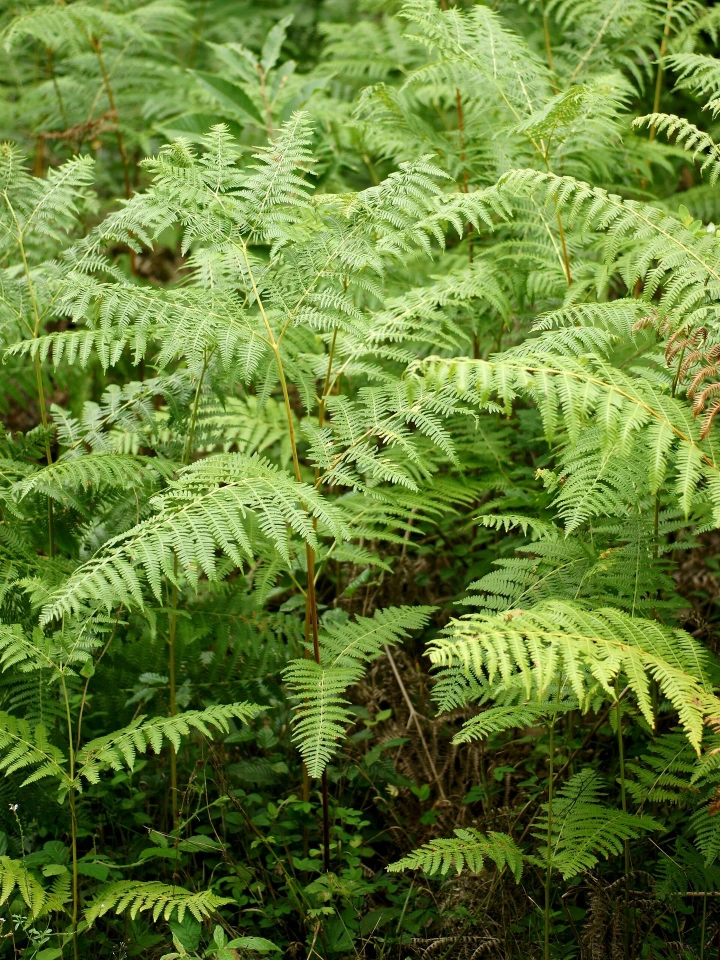
Bracken is the most widespread fern in the UK and one of the most dominant plants on moorland, heathland and woodland edges. It grows in dense colonies that can cover large areas, with large triangular fronds that divide repeatedly into opposite pairs of leaflets - a distinctive three-times-divided structure that makes mature bracken easy to recognise. Individual fronds can reach 1.5 metres in height and the colony as a whole creates a dense canopy that suppresses almost everything growing beneath it.
In spring the fronds emerge as tight coiled croziers or fiddleheads, uncurling as they grow. In autumn the fronds turn a characteristic russet brown and die back to ground level, leaving dead brown stems through winter. The underground rhizome system is extensive and persistent - bracken is extremely difficult to eradicate once established.
Most horse owners will not find bracken in managed paddocks but it is commonly encountered on grazing land that extends onto moorland or heath, in rough corners of fields adjoining woodland, and on land that has been undergrazed and allowed to naturalise. Horses generally avoid it when adequate grazing is available but will eat it when food is scarce.
What it does
Bracken contains thiaminase, an enzyme that destroys thiamine (vitamin B1) in the horse's body. Unlike acute toxins this is a cumulative effect - a single exposure causes no significant harm but repeated ingestion over weeks gradually depletes thiamine to the point where the nervous system begins to fail. A horse needs to eat bracken regularly over several weeks before clinical signs appear, which means the connection between the plant and the symptoms is often missed.
Symptoms of bracken poisoning include progressive weight loss, muscle weakness and trembling, incoordination particularly in the hindquarters, a characteristic stance with legs spread wide to maintain balance, and eventually seizures. The condition is called bracken staggers or equine enzootic ataxia and is treatable if caught early - thiamine injections from your vet can reverse the deficiency if significant irreversible nerve damage has not yet occurred.
Bracken also contains ptaquiloside, a carcinogen and immunosuppressant that causes bone marrow suppression with long-term exposure. This is more of a concern in cattle than horses but is worth noting as an additional reason to prevent access.
The plant remains toxic when dried, meaning bracken that has been cut and dried with hay retains its thiaminase activity. Hay from fields with bracken present should be avoided.
What to do
Fence off bracken-dominated areas if horses have access to rough grazing. Check rough corners of fields and field margins adjoining woodland or heath in summer when the fronds are at full height and easiest to identify. Cutting bracken repeatedly over several seasons weakens it but does not eradicate it - the rhizome system must be disrupted to achieve significant control. Herbicide treatment with asulam is effective but requires a professional applicator and has restrictions on use near water.
If you suspect bracken poisoning contact your vet promptly. Early thiamine treatment significantly improves outcomes.
BUTTERCUP (Ranunculus)
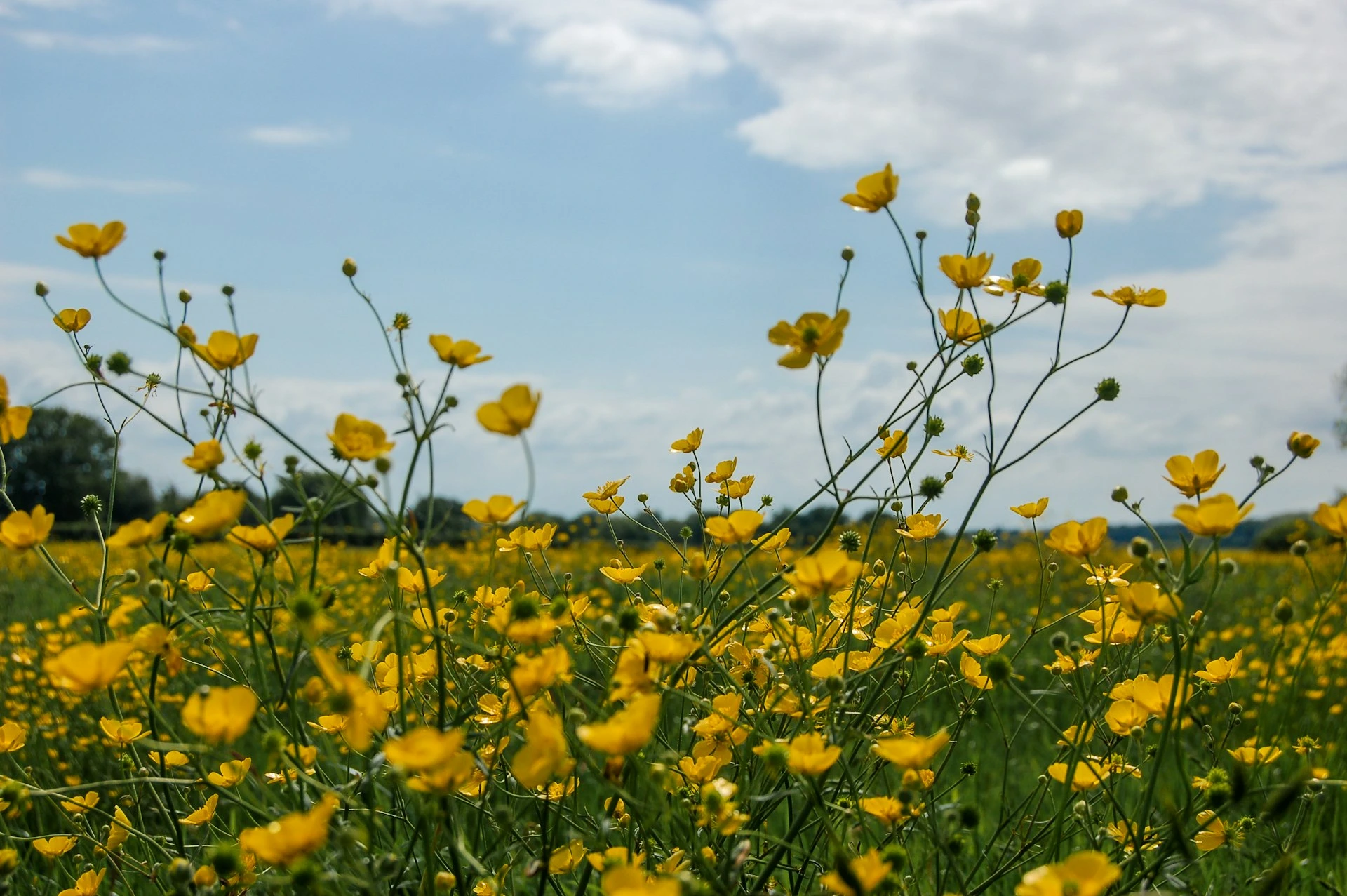
Buttercups are so familiar a sight in UK pastures that most horse owners have stopped noticing them, which is exactly the problem. They are not the most dangerous plant on this list by a considerable distance but they are almost certainly the most widespread, and a paddock full of buttercups is a paddock with a management problem that goes beyond the toxicity question.
Several species grow in UK pastures - meadow buttercup (Ranunculus acris), creeping buttercup (Ranunculus repens) and bulbous buttercup (Ranunculus bulbosus) are the most common. All share the same bright glossy yellow five-petalled flowers and deeply divided three-lobed leaves, though they differ slightly in habit and preferred soil conditions. Creeping buttercup spreads via runners across the surface and tends to dominate in wet, compacted or poorly drained pasture. Bulbous buttercup prefers drier, chalky soils. Meadow buttercup grows upright in unimproved grassland. For practical purposes the identification and management of all three is the same.
What it does
Buttercups contain ranunculin which converts to protoanemonin when the plant is damaged or chewed. Protoanemonin is an irritant that causes blistering and ulceration of the mucous membranes in the mouth, causing the horse significant discomfort. The burning sensation is usually enough to stop a horse eating more than a small amount, which is why serious poisoning from buttercups alone is uncommon in horses with adequate grazing available.
However horses with limited grazing, poor pasture or restricted access will eat buttercups out of necessity rather than choice, and larger quantities cause more serious effects including excessive salivation, colic, diarrhoea and in severe cases muscle tremors. The toxin is destroyed by drying so buttercups in hay are not a concern - the risk is from fresh plant material only.
The more significant issue with buttercups is often what their presence indicates about pasture condition. Dense buttercup populations typically indicate compacted, poorly drained or acidic soil with thin grass coverage - exactly the conditions that also favour ragwort and other toxic weeds. A paddock full of buttercups is telling you something about the management of the ground beneath them.
What to do
Where buttercups are sparse and grazing is good, management is straightforward - ensure adequate grass coverage so horses eat around them as they naturally will. Where buttercups are dominant, address the underlying pasture condition: improve drainage, aerate compacted ground with harrowing, overseed thin areas and consider a soil pH test if the problem is persistent.
Herbicide treatment is effective for severe infestations but keep horses off treated pasture for the recommended withdrawal period. For smaller areas hand pulling before seed set is practical and avoids chemical use.
HORSETAIL (Equisetum)
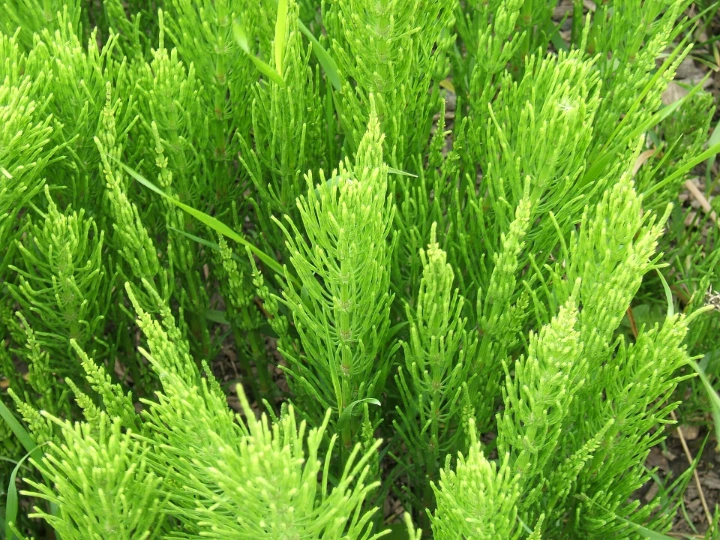
Horsetail is one of the oldest plant species on earth - a direct descendant of the giant tree-like plants that dominated the Carboniferous period 300 million years ago. The modern version is considerably smaller but no less persistent. It is one of the most difficult weeds to eradicate from pasture and one of the most likely to end up in hay without being noticed, which makes it a quiet but consistent risk for horse owners.
It is easy to identify once you know what to look for. Horsetail grows in upright individual plants with segmented hollow stems and whorls of thin green branches radiating outward from each joint, giving it the appearance of a bottle brush or miniature pine tree. The stems have a distinctly rough, almost sandpapery texture due to silica deposits in the cell walls. It grows in colonies, often in damp or poorly drained ground, along ditch edges and in compacted areas of pasture. In early spring it sends up separate fertile shoots - brown cone-topped stems with no branches - before the familiar green vegetative shoots emerge.
Horses rarely eat fresh horsetail voluntarily due to its rough texture and unpleasant taste. The problem arises when it is cut and dried with hay, at which point it becomes palatable and retains its full toxicity. Hay from fields with horsetail present is a genuine risk, particularly hay cut from rough or damp ground where horsetail is more likely to be established.
What it does
Like bracken, horsetail contains thiaminase which destroys vitamin B1 (thiamine) in the horse's digestive system. The effect is cumulative - repeated ingestion over weeks gradually depletes thiamine until the nervous system begins to fail. A horse eating horsetail-contaminated hay daily through winter can develop serious thiamine deficiency without the source ever being identified.
Symptoms are similar to bracken poisoning and include progressive weight loss, muscle weakness, incoordination particularly in the hindquarters, a wide-based stance, trembling and eventually seizures. The condition develops slowly and the connection to the feed source is frequently missed until significant damage has occurred.
In addition to thiaminase, horsetail contains aconitic acid and other compounds that affect the nervous system and can cause additional symptoms including rapid heart rate and breathing difficulties in severe cases. Long-term exposure also causes damage to the heart and kidneys.
What to do
Check hay sources carefully, particularly hay sourced from damp or rough ground. Ask your supplier whether horsetail is present in their hay fields and whether they manage it actively. If you find horsetail in a hay bale discard the entire bale rather than feeding it out.
In pasture, address the underlying conditions that allow horsetail to establish - improve drainage in wet areas, aerate compacted ground and maintain good grass coverage. Horsetail is extremely difficult to eradicate due to its deep rhizome system and spore-based reproduction. Repeated cutting weakens it over time but chemical control is limited since most herbicides have poor efficacy against it. Prevention through pasture management is more effective than attempted eradication.
If you suspect thiamine deficiency contact your vet. Thiamine injections are effective if treatment starts before irreversible nerve damage has occurred.
CHARLOCK (Sinapis Arvensis)
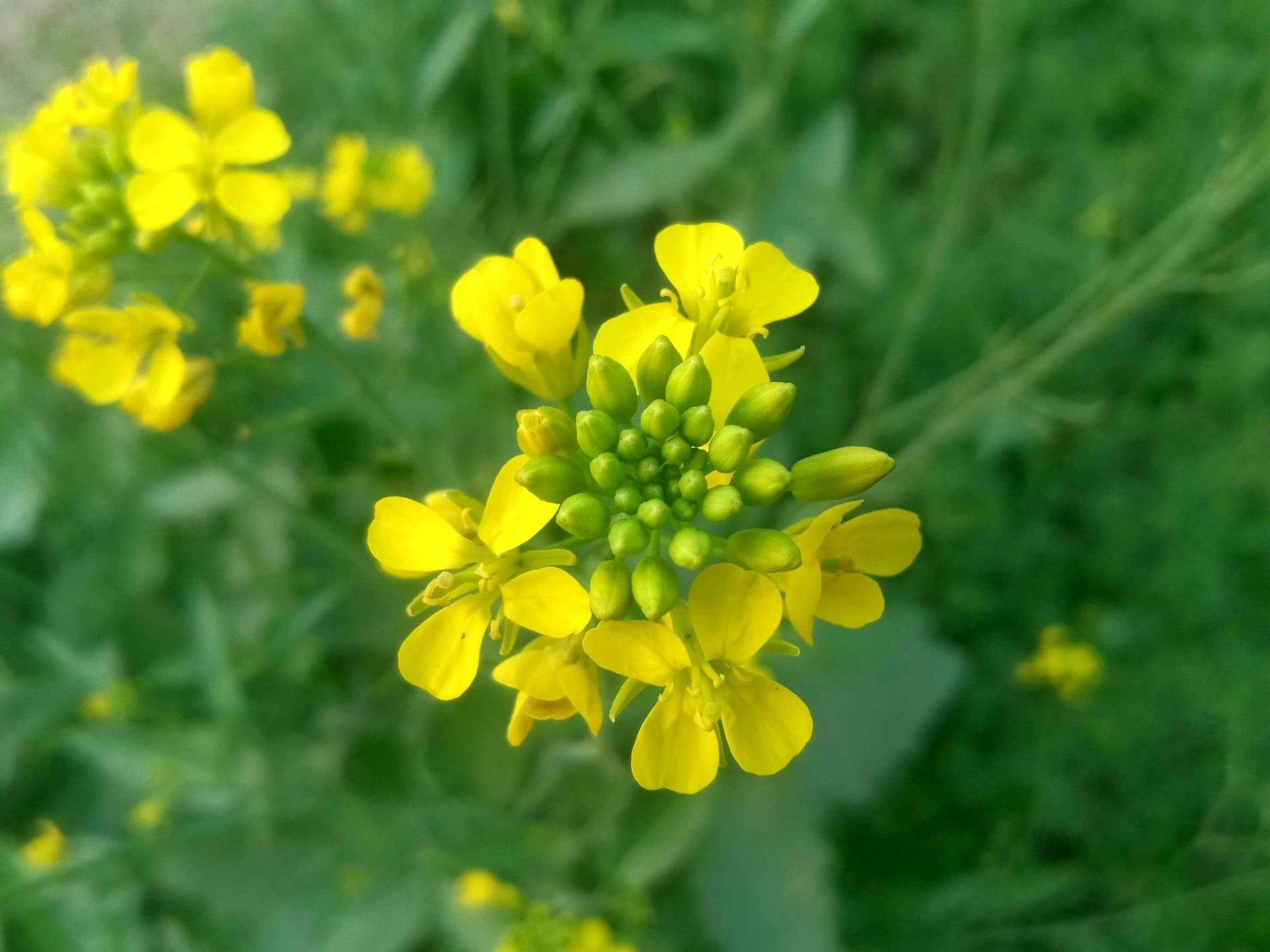
Charlock, also known as wild mustard, is an arable weed that has been a familiar sight in UK fields and field margins for centuries. It is most commonly found in cultivated or disturbed ground - arable field edges, recently ploughed or reseeded areas, and rough ground along field boundaries. It is less commonly a problem in well-established permanent pasture but appears readily wherever the ground has been disturbed, making it a risk in paddocks that have been reseeded, harrowed aggressively or had groundworks carried out.
It grows quickly, reaching 30 to 80cm in height, with coarse hairy leaves that are irregularly lobed on the lower stem and simpler and less divided higher up. The flowers are a clear bright yellow with four petals arranged in a cross - the crucifer flower structure that distinguishes it from buttercup or ragwort despite the similar yellow colouring. The seed pods are long, narrow and ribbed, ending in a tapered beak. Charlock flowers from April through to August and produces large quantities of seed that can remain viable in soil for decades, meaning it reappears readily whenever ground is disturbed.
What it does
Charlock contains glucosinolates and other mustard oil compounds that are toxic to horses in quantity. Horses do not generally find it palatable and will avoid it when good grazing is available, but will eat it when grass is scarce or when it has been incorporated into hay or silage.
The primary effects are on the digestive system. Symptoms of charlock poisoning include excessive salivation and frothing at the mouth, bloating, colic, diarrhoea, and in more severe cases breathing difficulties caused by irritation of the mucous membranes and respiratory tract. The mustard compounds can also cause blistering of the mouth and digestive tract lining with repeated exposure.
Charlock in hay is a more significant risk than fresh plant ingestion since the drying process does not fully destroy the toxic compounds and horses are less able to selectively avoid it when it is mixed through forage.
What to do
Remove charlock from paddocks before it sets seed to prevent the soil seed bank building up. In small quantities hand pulling is practical and effective. For larger infestations targeted herbicide treatment is more efficient - charlock is susceptible to most broadleaf herbicides applied at the correct growth stage.
Address the underlying conditions that allow it to establish. Charlock thrives in disturbed ground so minimise unnecessary soil disturbance in and around paddocks. After any groundworks or reseeding monitor the area closely for charlock emergence in the following growing season and treat early.
Check hay sources from arable or mixed farming operations where charlock is more likely to be present in field margins. If you find charlock in a hay bale discard rather than feed out.
MONKSHOOD (Aconitum)
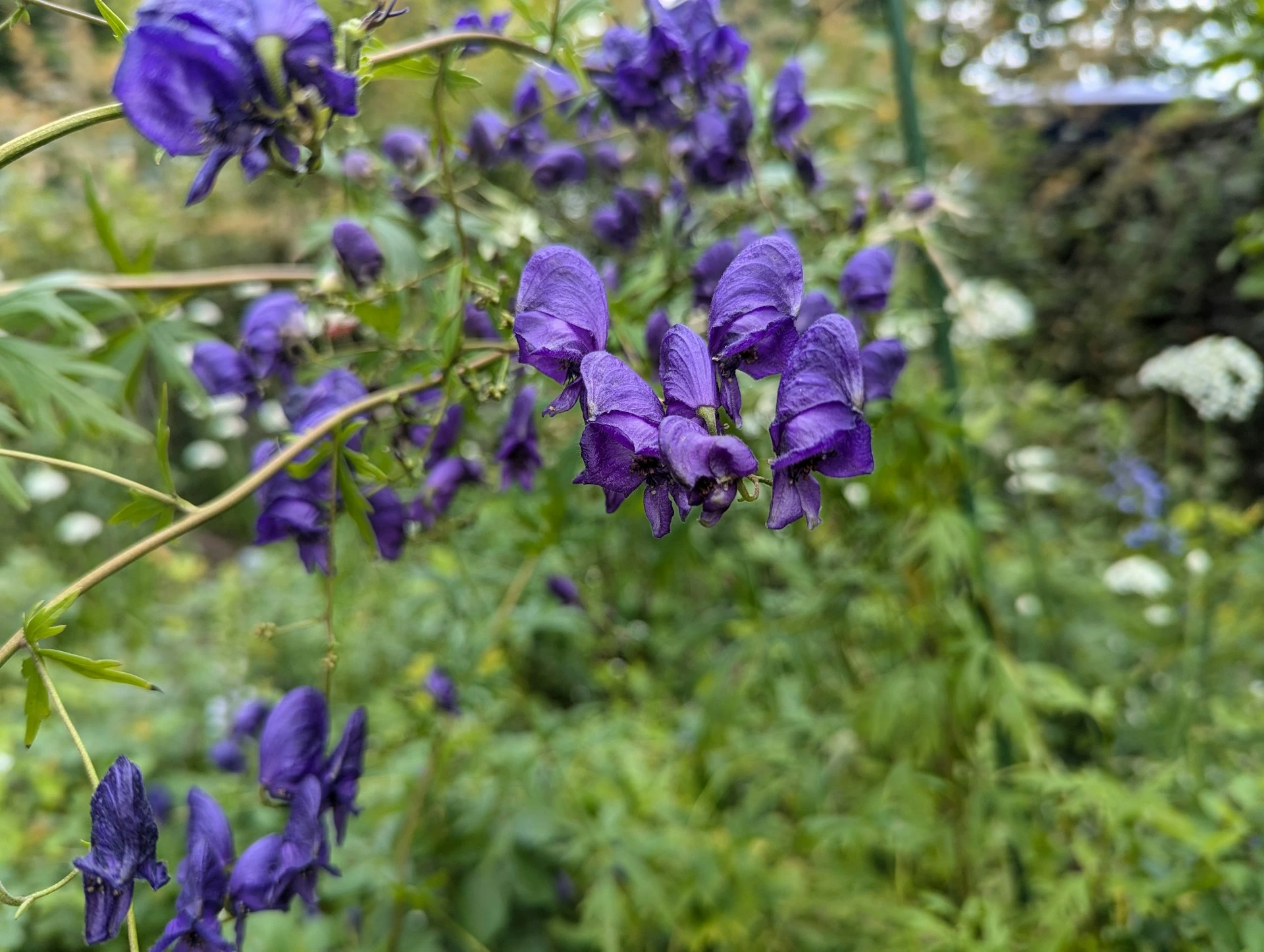
Monkshood holds the grim distinction of being the most acutely toxic plant native to the UK - more immediately lethal dose for dose than even yew. The saving grace is that it is genuinely rare in the wild and horses are extremely unlikely to encounter it in a typical paddock or hedgerow setting. It is far more commonly found as a garden ornamental, where its striking tall spikes of deep purple hooded flowers make it a popular border plant - which is where the risk lies for horse owners with gardens or ornamental planting adjoining their paddocks.
The plant grows to between 60cm and 1.5 metres tall with deeply divided dark green leaves that have a somewhat glossy appearance. The flowers are the most distinctive feature - tall spikes of deep purple or blue flowers where the uppermost petal forms a distinctive curved hood or helmet shape over the rest of the flower, giving the plant its common name. This hooded structure is unique and makes monkshood unmistakable when in flower from June to September. Some cultivated varieties produce white or yellow flowers but the hooded structure remains the same.
All parts of the plant are highly toxic at all times of year including the roots, which contain the highest concentration of toxin and present a risk during garden maintenance if horses have access to freshly dug soil or discarded plant material.
What it does
Monkshood contains aconitine, one of the most potent naturally occurring toxins known. It acts on the nervous system and heart simultaneously, blocking the sodium channels that control nerve and muscle function throughout the body. The effect is rapid and devastating - symptoms can begin within minutes of ingestion and progress quickly to a fatal outcome.
Symptoms include immediate intense burning and tingling in the mouth and lips, excessive salivation, nausea, progressive muscle weakness, a slow and irregular heartbeat, a dramatic drop in blood pressure, breathing difficulties and paralysis. Death occurs through cardiac and respiratory failure. Even skin contact with the sap during handling can cause numbness and tingling - wear gloves when working near this plant.
There is no specific antidote. Treatment is supportive and the window for intervention is narrow. If you have any reason to suspect monkshood ingestion call your vet as an emergency immediately without waiting for symptoms to develop.
What to do
Do not plant monkshood in or near gardens that adjoin horse paddocks. If you have existing monkshood in a garden boundary remove it entirely or ensure there is no possibility of horses accessing it through or over the fence line. Pay particular attention to fallen leaves, spent flower spikes and especially roots - all are highly toxic and horses may investigate freshly disturbed garden soil.
If you are buying a property with horses and an established garden, check the borders for monkshood before turning horses out near garden boundaries. It is a common enough garden plant that its presence should always be considered when assessing a new yard.
Given its rarity in the wild a sighting of monkshood in a hedgerow or field margin in the UK is unusual enough to warrant double checking the identification before acting - but if confirmed, remove it immediately using gloves and dispose of it safely rather than composting or leaving on site.
Practical Paddock Management to Reduce Plant Risk
Removing dangerous plants is the essential first step, but the conditions that allow them to take hold in the first place are worth addressing. Most toxic plants thrive in poorly managed, overgrazed or poached pasture where grass coverage is thin and competition from healthy sward is reduced. Ragwort, bracken and charlock in particular colonise bare or disturbed ground quickly.
A few practical measures that reduce risk significantly:
Rotate grazing regularly
Rested pasture recovers faster, grows denser grass, and leaves less bare ground for weeds to establish. Horses restricted to the same area year-round will overgraze and poach the ground, creating exactly the conditions toxic plants prefer.
Harrow paddocks in spring
Harrowing removes dead vegetation, aerates the soil and encourages healthy grass growth - a denser sward naturally suppresses weed establishment. The ArenaMate Grass Harrow is designed for equestrian paddock use and pulls up thatch and dead material without damaging the root system.
Manage high footfall areas
Gateways, water points and feeding areas are where horses congregate and poach the ground most heavily. These patches of bare mud are prime spots for ragwort and other weeds to establish. HIT Top Clean ground mats create a firm, clean surface in these areas year-round, protecting the ground underneath and reducing the bare soil that weed seeds need to germinate.
Ensure adequate water access
Horses with reliable, clean water access are less likely to graze indiscriminately along hedgerows and fence lines where many of the plants on this list are most commonly found. Auto drinkers positioned away from boundaries keep horses drinking in the paddock rather than seeking water near hedgerows.
Check hay sources
Foxglove, hemlock and horsetail can all be accidentally harvested with hay. Buy from suppliers who actively manage their fields for toxic plants and check bales visually if you have any doubt about the source.
Keeping Your Horses Safe Year-Round
Plant toxicity is one of the more preventable causes of serious illness and death in horses - most cases involve plants that were present and unmanaged rather than sudden unexpected exposure. Regular paddock checks, good grazing management and addressing the bare ground conditions that toxic plants exploit are the most effective long-term protection.
If you have questions about paddock management equipment, ground mats for high footfall areas or water systems for your yard, get in touch with the Jelka team - we work with horse owners across the UK on practical solutions for safer, better managed equestrian environments.
Worried about plants in your paddock?